
How to Spot Child Withdrawal and Reconnect With Your Kids
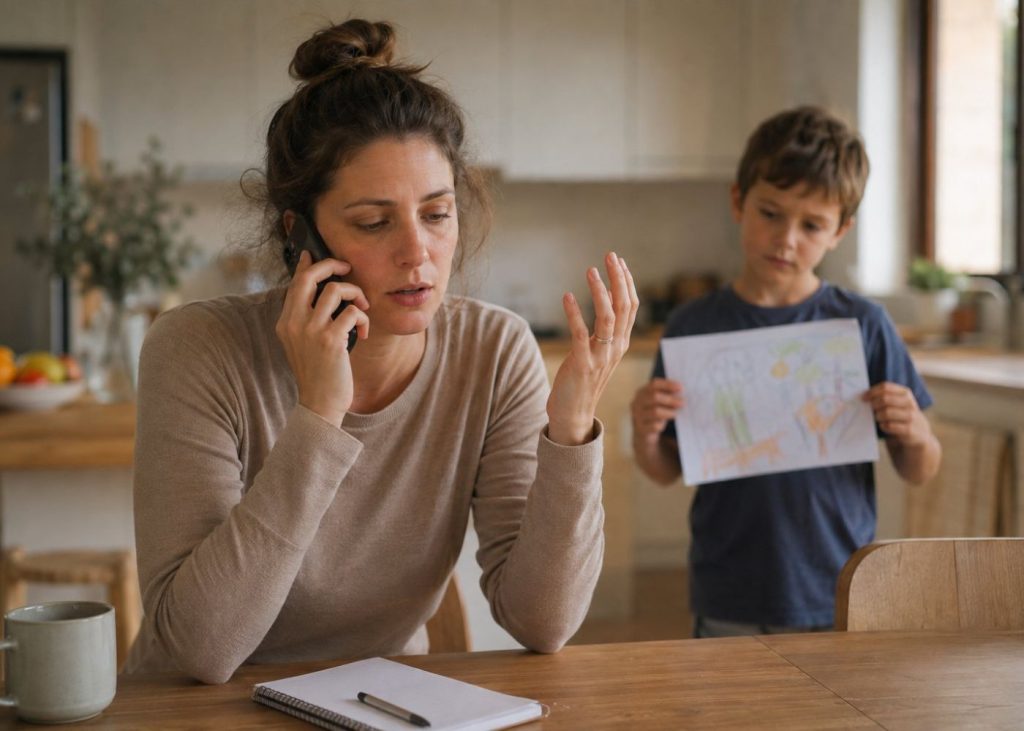
Your laptop is open on the kitchen table, the same table where the breakfast bowls sat an hour ago. A client email needs a reply. Your child wanders in, wanting to show you something on their tablet, or ask what’s for lunch, or just be near you for a minute. You say “just a sec” without really looking up. Ten minutes later you realise you never looked up at all.
You’re home. You’re right there. But you weren’t, not really, and if you’re honest, this happens more days than it doesn’t.
This is the quiet trap of working from home: being physically present all day doesn’t automatically mean being emotionally available, and your kids can tell the difference even when they can’t say it.
Left unchecked, this pattern is one of the quieter, more common drivers of child withdrawal, and one of the easiest for a busy parent to miss, because nothing dramatic ever happens. Nobody yells. Nothing breaks. The distance just grows, one distracted afternoon at a time.
Why Work From Home Mums Are More Exposed to Child Withdrawal
When you work outside the home, there is a boundary drawn for you. You leave. You are unmistakably “at work.” Your children know this and adjust accordingly; they don’t expect your full attention until you walk back through the door.
Working from home removes that boundary completely.
You are in the next room, or at the same table, or one flight of stairs away, all day. To a child, “mum is home” and “mum is available” have always meant roughly the same thing. So when you’re distracted, deep in a spreadsheet, mid client call, mentally three tabs away from the room you’re standing in, it doesn’t read to your child as “mum is at work.” It reads as “mum is right here and still not really looking at me.”
That’s a different and more confusing signal than a clean absence. An office-working mum’s absence has a shape a child can understand. A work from home mum’s partial attention doesn’t, and children, particularly younger ones who don’t yet have the words for what they’re noticing, often respond to that confusion not with a tantrum but with a quieter, more gradual form of child withdrawal. They stop trying to compete for attention they’ve learned they won’t reliably get.
Signs of Child Withdrawal Worth Paying Attention To
Some of this is completely ordinary. No parent, working from home or otherwise, is fully present every single minute of the day, and children are resilient enough to cope with a distracted afternoon here and there.
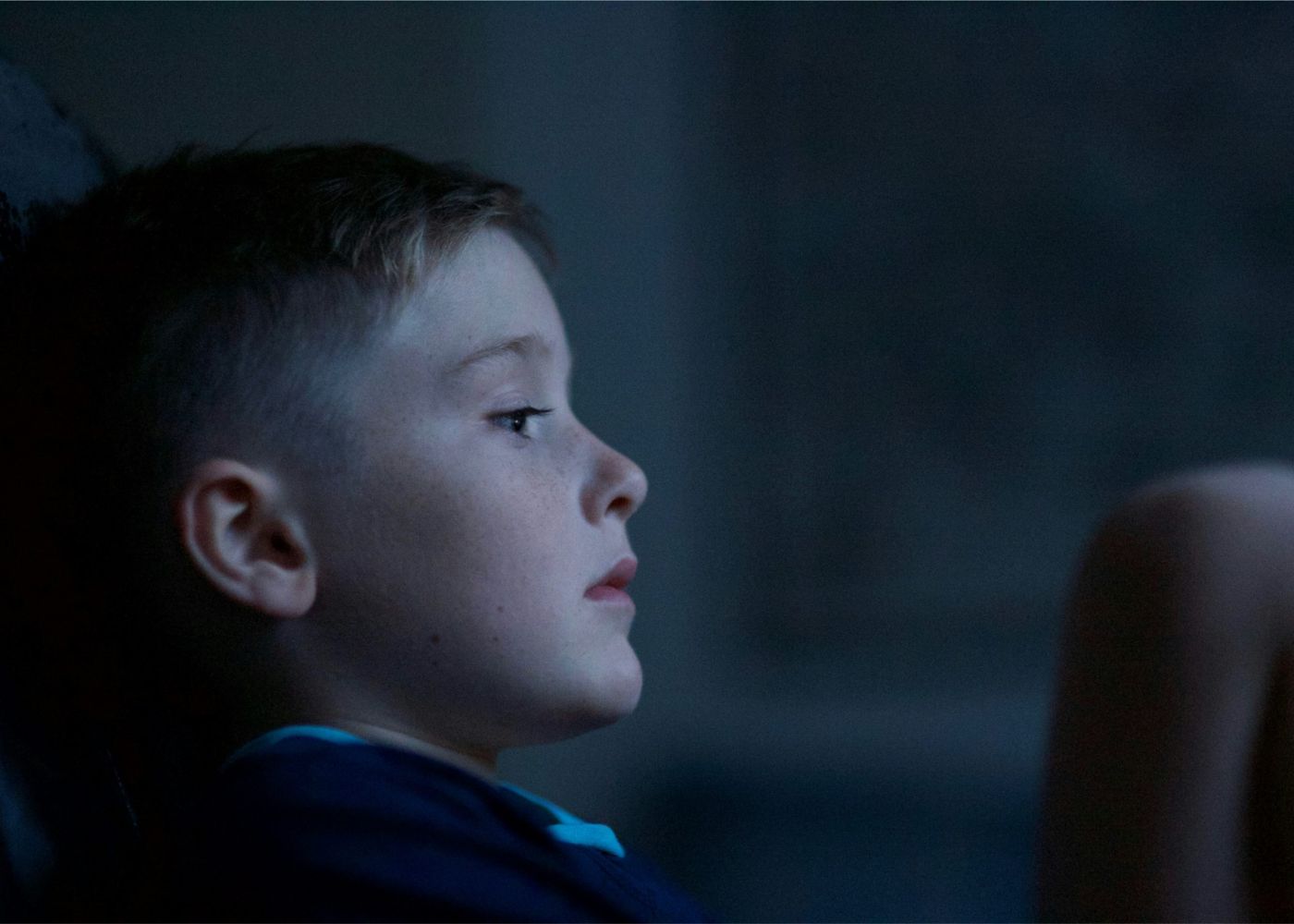
What’s worth paying attention to is a pattern, not a moment — the same signs of child withdrawal turning up again and again, over weeks rather than days.
In younger children, this can look like:
- Losing interest in showing you things they’d normally rush to share
- A quiet flatness where there used to be chatter
- Playing alone more, and not seeming to mind
In older children and teenagers, it more often looks like:
- The bedroom door closing earlier and staying closed longer
- Headphones that don’t come off, even at the dinner table
- “I’m fine” delivered as a full stop rather than an opening
These are the signs that are worth taking seriously when spotting child withdrawal: the closed door, the one-word answers, the headphones that never come off. If you notice any of these for weeks or months, it may be a sign that something deeper is going on, which may require professional support.
University of Wollongong research analysing more than a dozen studies found that parental technology use in front of children was consistently linked to poorer outcomes for kids, including internalising behaviours like withdrawal and anxiety.
This isn’t about villainising screens or laptops, they’re how most of us run our businesses now, but it’s a reminder that a parent’s divided attention registers with a child as something real, not nothing.
A Pattern I See Often in My Practice
I think of a client I saw a while back, a mum running a small online business from her dining table while parenting two primary-school-aged kids. She wasn’t neglecting anyone. By any outside measure she was doing an enormous amount well: the business was growing, the kids were fed, homework got done, bedtimes happened.
What she’d stopped noticing was that her younger daughter had quietly stopped bringing her things. No more “look what I made,” no more interrupting with the small, delightful nothings that fill a young child’s day. Her daughter hadn’t complained. She’d simply adjusted, learning that mum’s attention was a limited resource best not competed for.
By the time this mum noticed the change, she assumed something bigger was wrong, a bullying issue at school, a friendship falling apart. It wasn’t. It was smaller and, in some ways, harder to see: her daughter had learned that “mum is home” didn’t reliably mean “mum is available,” and had quietly stopped expecting otherwise.
If that sounds uncomfortably familiar, you’re not a bad parent for it. You’re a parent running two full-time jobs out of the same small space, and this is one of the most common, least talked about costs of that arrangement.
The good news is that learning to reconnect with your kids after a pattern like this doesn’t require a dramatic overhaul, just a few consistent, visible changes.
How to Reconnect With Your Kids
Make the Line Visible, Not Just Real
Even without a commute, you can build a visible signal that separates work-mode from mum-mode, something your child can actually see and learn to read. Turning your work hours and availability into something your kids can understand, a closed door that means “not now,” an open one that means “come in”, does more for connection than good intentions alone, because it removes the guesswork that leads kids to assume the worst.
Protect Small Pockets of Undivided Time
You don’t need an hour. Ten uninterrupted minutes where your phone is out of reach and your attention is entirely on your child does more for connection than a distracted afternoon of technically being in the same room. Put it in your work calendar if that’s what it takes to protect it.
Step Away Before You Step Back In
If you notice yourself snapping, or noticing your child from a distance rather than really seeing them, a short walk can be enough to reset an overloaded nervous system before you try to reconnect. Trying to be present while you’re still running on fumes rarely works.
Name What’s Happening, Briefly
You don’t need a long conversation. Something as simple as, “I’ve been really busy with work this week, and I want you to know I’ve noticed, and I’m going to make some time for us,” tells a withdrawing child that the disconnect has been seen, which is often exactly what they needed to hear.
When Child Withdrawal Needs Extra Support
Most of this settles with small, consistent changes. But some child withdrawal runs deeper than a busy work season, and it’s worth taking seriously rather than waiting to see if it passes on its own.
It’s worth seeking support if:
- The withdrawal has lasted more than a few weeks and isn’t easing
- It’s showing up alongside changes in sleep, appetite, or school performance
- Your attempts to reconnect keep falling flat, even when you make the effort
- You notice yourself worrying about it more than you’d expect to for an ordinary busy patch
When it’s time for extra support, family therapy that works with the whole household rather than treating the child as the problem tends to be the more effective path, because withdrawal usually lives in the relationship, not in one person alone. If you’d rather start somewhere lower-stakes than booking an appointment, there’s also a free downloadable checklist on that page for resetting connection at home.

Final Thoughts on Reconnecting With Your Kids While Working From Home
Working from home was probably never meant to come at the cost of connection with your kids; if anything, it’s usually the opposite reason most of us chose it in the first place. But presence and availability aren’t automatically the same thing, and learning to reconnect with your kids before child withdrawal sets in is worth the small, deliberate effort it takes.
To reconnect with your kids while you work from home:
- Make your work/home line visible to your kids, not just real to you
- Protect small pockets of fully undivided attention
- Reset before you try to reconnect, rather than pushing through
- Name the disconnect briefly rather than letting it go unspoken
It’s worth getting extra support for child withdrawal if:
- Withdrawal has lasted weeks, not days, and isn’t easing
- It’s affecting sleep, appetite, or school performance
- Your own attempts to reconnect with your kids aren’t working
- You’re worrying about it more than the situation seems to warrant
You built this business to have more of your family, not less of them. A few small, visible changes are usually enough to close that gap before it becomes something bigger.

John Bartram is a leading registered psychologist based in NSW, with over 30 years’ experience helping busy mums manage their mental health, reconnect with their partners and foster a healthy family life while navigating challenges like working from home. He holds a Master’s degree in Couple & Family Therapy from UNSW, is a full member of the Australian Psychological Society, and is a Certified Sensorimotor Psychotherapist, drawing on CBT, mindfulness and Sensorimotor Psychotherapy to help clients achieve lasting wellbeing.