
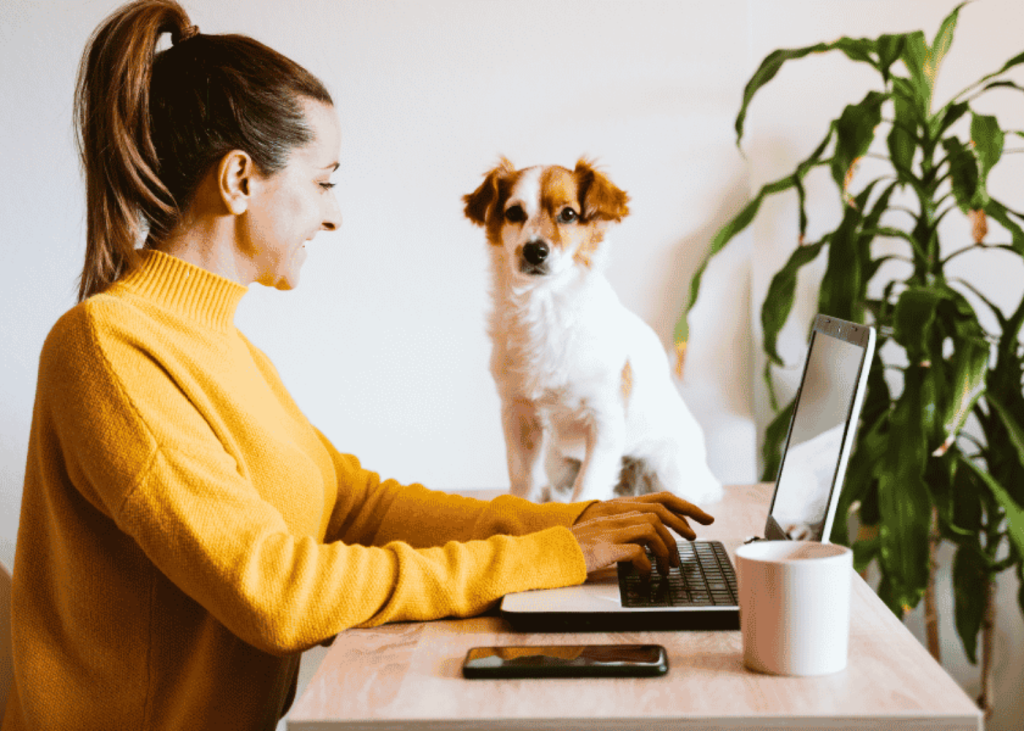
A Dog Mum’s Guide To Working Remotely While Travelling
You can work remotely while travelling with your dog and still be the best work-from-home dog mum you can be…
The trick is to set up two spaces, not one:
- A mobile office you can recreate anywhere,
- A settled spot for your dog so they rest while you work.
Get the routine right, and a change of scenery becomes a perk for both of you rather than a productivity drain.
More work-from-home mums are taking the laptop on the road, and more of them are bringing the family dog. A few weeks housesitting, a working holiday by the coast; remote work makes it possible, and your dog doesn’t have to miss out.
The catch is that a strange room, a new routine, and a bored dog can turn your set-up into a stressful one. This guide covers how to work remotely with a dog without the chaos. Building a mobile office that works, keeping your dog settled while you focus, and travelling with your dog safely from the drive to the destination.
Written from a vet’s point of view…
Can you really work remotely while travelling with your dog?
Yes, and the dogs who travel best are the ones whose owners plan for two needs at once: yours and theirs.
Your productivity depends on a workspace you can recreate anywhere. Your dog’s behaviour depends on feeling safe and having enough to do. When both are sorted, the interruptions, the barking on calls, the restlessness, mostly disappear.
Think of it as two set-ups that sit side by side. One is your desk. The other is your dog’s space. The rest of this guide builds on each one.
How to set up a mobile office that actually works
Recreate the essentials of your home office in miniature:
- A dedicated work zone,
- A workable seat and screen height,
- Reliable power and internet,
- Good lighting.
The same principles behind a good home set-up still apply when you’re working remotely, they just have to pack down small.
Start with the fundamentals you already know from setting up at home. SuperWAHM’s guide to home office setup and its advice on what makes a good workstation both translate directly to a temporary space.
The portable version looks like this:
- A dedicated zone. Even a corner of a kitchen table that is only used for work helps your brain switch on. Keep it consistent each day.
- Screen and seat height. A lightweight laptop riser plus a separate keyboard saves your neck. Aim for the top of the screen at eye level and forearms parallel to the desk.
- Power and internet. Pack a power board, a long charging cable, and a backup option for wifi such as a phone you can hotspot from. Confirm the internet before you book a longer stay.
- Natural light. Set up near a window where you can. Good light lifts your mood and reduces eye strain, and it gives your dog a warm spot to settle nearby.
- A shut-down ritual. Packing the laptop away at the end of the day signals the workday is over, which matters even more when home and office are the same room.
How to keep your dog settled while you work
Give your dog a job, a bed, and a predictable rhythm, and they will sleep through most of your working day.
From a vet’s perspective, the dogs that disrupt remote work are almost always under-exercised, under-stimulated, or unsure where they are meant to be. These three things help do the heavy lifting:
- Exercise before you start. A proper walk or play session before you open the laptop is the single best investment in a quiet morning. A tired dog rests. An unspent one paces.
- Have a familiar settle spot. Bring the same bed or mat from home and place it beside your desk in every new location. The familiar smell tells your dog this is their place to relax, even when the room is strange.
- Provide something to chew on. A long-lasting chew or a food puzzle during your first deep-work block keeps your dog busy and builds a calm association with you working.
For video calls, set your dog up with their chew on the settle mat just before you join, and position your desk so a doorway or quiet wall is behind you. A dog that has been walked, fed, and given something to do rarely steals the show on a Zoom call.
Travelling with your dog safely
Tips to getting to your destination and selling in…
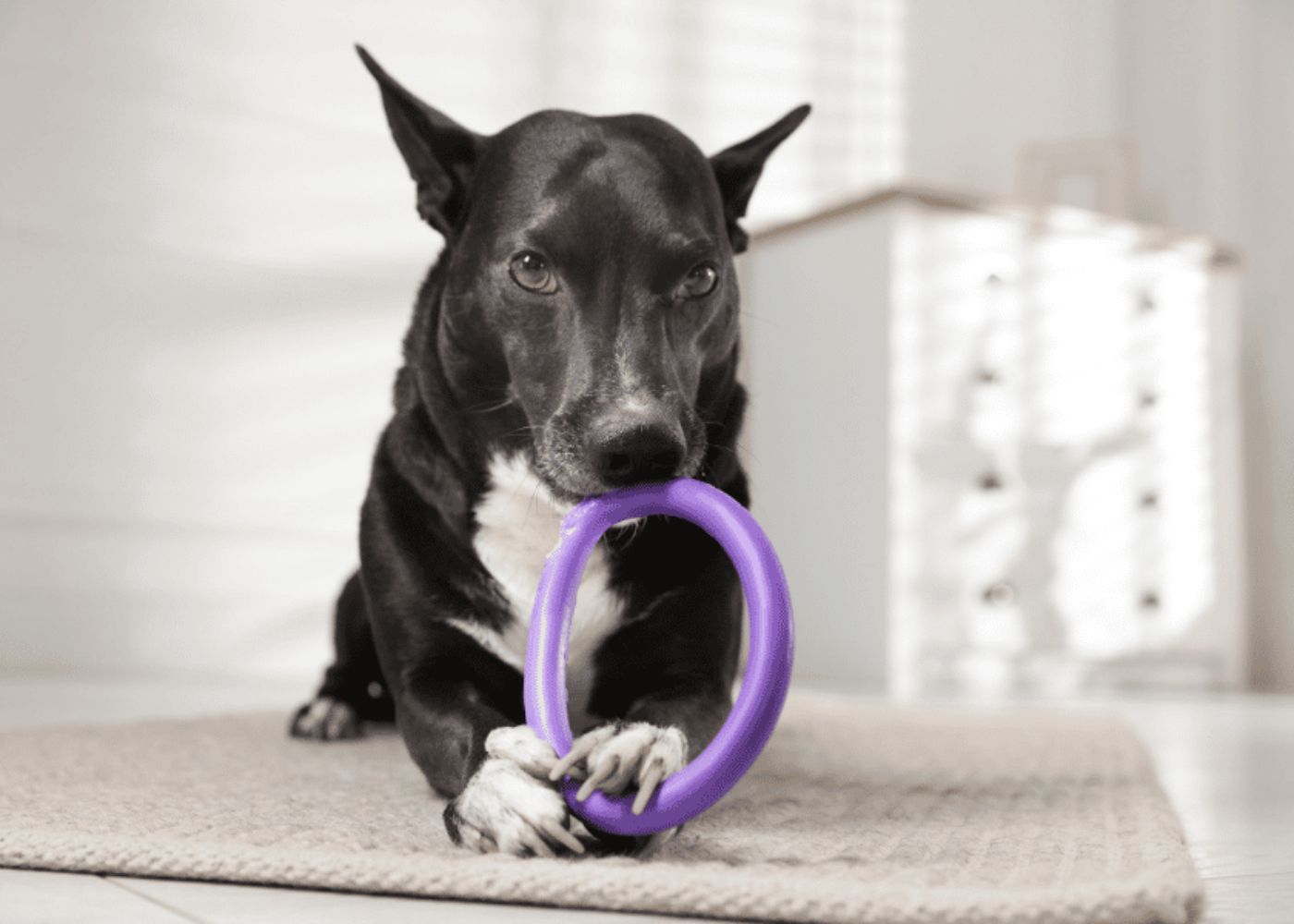
It’s important to plan the drive as carefully as the destination. Restrain your dog in the car, have regular breaks, and never leave them in a parked car, which heats to dangerous levels within minutes in the Australian climate.
If your dog finds the car hard, sort it before a long trip rather than during one. I recently wrote a vet’s guide to why dogs get car sick which walks through the simple desensitisation plan and the options that settle most dogs.
For broader safety basics, the RSPCA’s pet travel guide is a sound, free read on restraint, breaks and heat.
When you arrive, give your dog a slow introduction. Walk them around the new space on lead, show them their settle mat and water, and keep the first day low-key. A calm arrival sets up a calm working week.
Choosing pet-friendly accommodation
Book pet-friendly accommodation well in advance and confirm the pet policy directly with the host or property, rather than relying on a listing tag alone. Ask about weight or breed restrictions, whether your dog can be left alone in the room, and whether there is a yard or nearby space for walks and toilet breaks.
Genuinely dog-friendly stays book out fast, especially over school holidays and long weekends, so lock these in before the rest of the trip.
A simple daily rhythm for working remotely with a dog
A predictable shape to the day keeps both of you settled. One that works well on the road:
- Early walk or play to burn energy before work begins.
- A deep-work block while your dog chews or naps on the settle mat.
- A midday break for a short walk, lunch, and a reset for you both.
- An afternoon work block, with a puzzle feeder if your dog is restless.
- A clear shut-down, then a longer outing or beach trip as the reward.
What to pack for travelling with your dog
Keep a single bag packed so leaving is easy. Here’s some key essentials:
- Your kit: laptop riser, separate keyboard and mouse, power board, long cables, and a wifi backup.
- Your dog’s kit: their usual bed or mat, water bowl, lead, long-lasting chews and a food puzzle.
- Health basics: current parasite prevention, any medications, vaccination records, and your vet’s contact details.
- A copy of your dog’s ID and an up-to-date microchip registration in case you are separated.
Final tip to travelling with your dog while working remotely
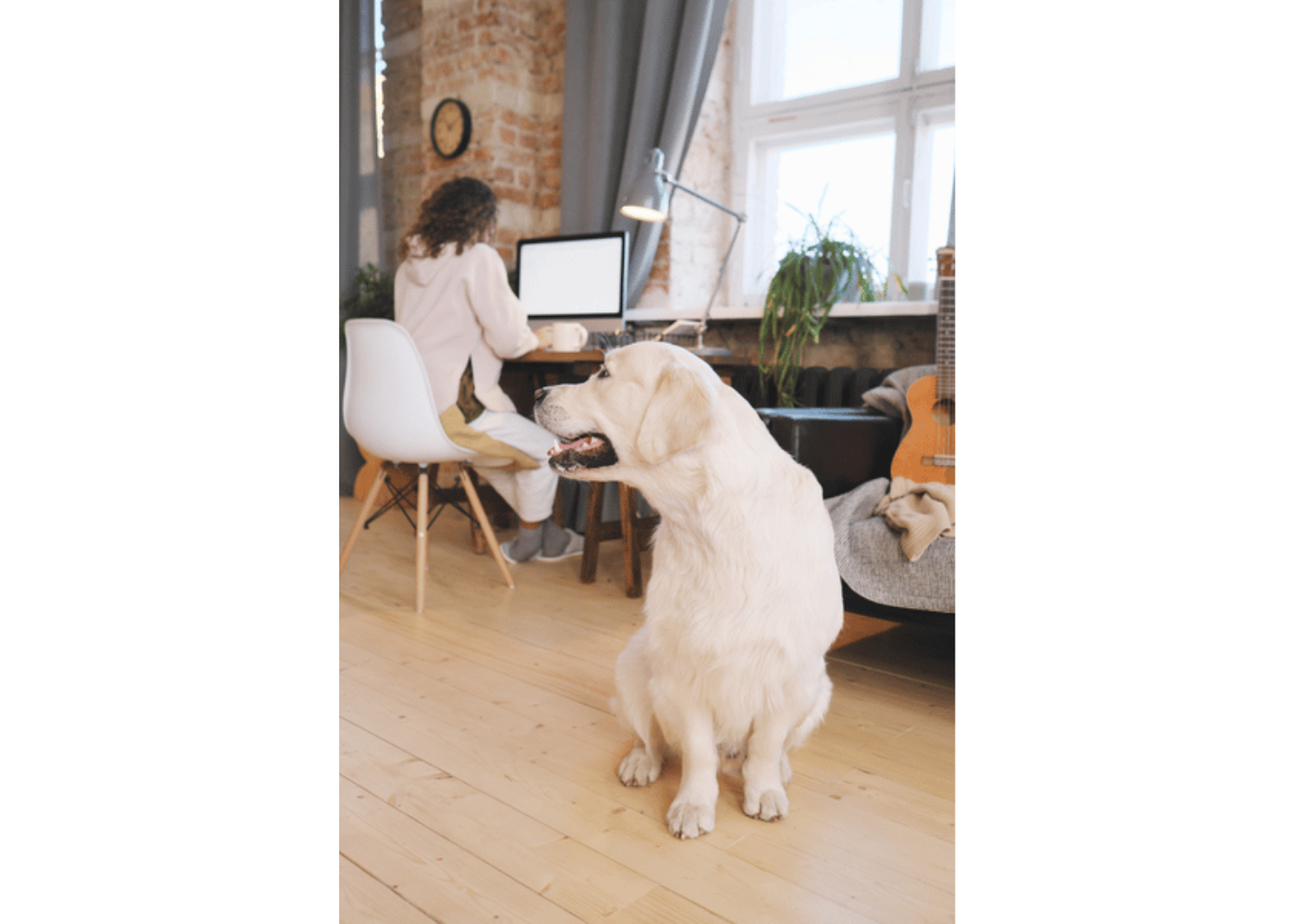
You can work remotely while travelling with your dog if you plan two spaces: your mobile office and your dog’s settle spot.
- Recreate the basics of a good home office: a dedicated zone, sensible screen and seat height, power, wifi and light.
- A walked, fed and occupied dog rests while you work. Bring a familiar bed and a chew to every new location.
- Travel safely: restrain your dog, take breaks, never leave them in a parked car, fix car sickness before the trip, and book pet-friendly accommodation early.
- Keep a predictable daily rhythm, and reward the workday with a proper outing for both of you.
Disclaimer: This article is general information and not a substitute for advice from your own vet

Dr Sharon is a registered Australian veterinarian and the founder of Pet Voyage, a vet-written guide to travelling with pets in Australia. She loves sharing her views on pet travel health, safety and gear with all dog mums so families can explore confidently with their dogs and cats.